

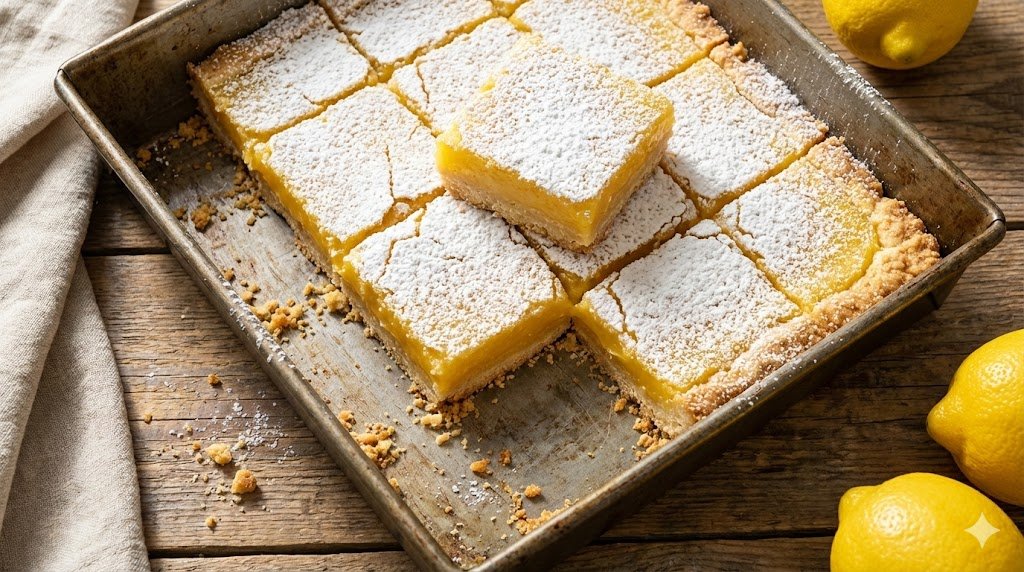
Let’s be honest. When life hands you lemons, forget the lemonade. Lemonade is boring. Instead, make Lemon Bars with Shortbread Crust. They are essentially sunshine in edible form—tangy, buttery, and just sweet enough to make you forget your problems for five minutes. 🍋
I have a complicated history with lemon bars. My first attempt resulted in a soggy, eggy mess that tasted like sweetened scrambled eggs on a cracker. It was tragic. But after years of tweaking (and eating way too many “test” batches), I finally cracked the code.
The secret isn’t just in the lemon filling; it’s in the crust. You need a sturdy, buttery shortbread base that can hold up the weight of that gooey citrus layer without collapsing. It’s a structural engineering project, but delicious.
Today, we ditch the boxed mix. We are making real lemon bars that strike the perfect balance between tart and sweet. So, grab your zester and let’s get baking. 🧈
Why Shortbread Is The Superior Crust
You might ask, “Can’t I just use a graham cracker crust?”
Sure, if you want mediocrity. But graham crackers get soggy the second the wet filling hits them. Shortbread, on the other hand, is dense and fatty (in a good way). It acts as a barrier, preventing the lemon curd from soaking through and ruining the texture.
Plus, the flavor contrast is unbeatable. The buttery, slightly salty crust cuts through the sharp acidity of the lemon. It’s like they were made for each other. IMO, a lemon bar without shortbread is just lemon pudding. And nobody wants that. :/
The Grocery List (Freshness Matters)
Since lemon is the star here, don’t use the bottled stuff. Bottled lemon juice tastes like plastic and sadness. Buy real lemons.
Here is exactly what you need:
The Shortbread Base
- 1 Cup (2 Sticks) Unsalted Butter: Softened to room temperature.
- 1/2 Cup Granulated Sugar: Or powdered sugar for a finer texture.
- 2 Cups All-Purpose Flour: Spoon and level it!
- 1/4 Teaspoon Salt: To balance the butter.
The Lemon Layer
- 4 Large Eggs: Room temperature.
- 2 Cups Granulated Sugar: Yes, it’s a lot. Lemons are sour.
- 1 Cup Fresh Lemon Juice: This takes about 4–6 lemons depending on their size.
- 1 Tablespoon Lemon Zest: For that aromatic punch.
- 1/2 Cup All-Purpose Flour: This thickens the filling so it sets.
- Powdered Sugar: For dusting the top.
Step 1: The Crust Construction
Preheat your oven to 350°F (175°C).
Line a 9×13 inch baking pan with parchment paper. Leave some overhang on the sides so you can lift the bars out later. Trust me, you do not want to dig these out with a knife.
In a large bowl (or stand mixer), beat the softened butter and 1/2 cup sugar until light and fluffy.
Add the 2 cups flour and salt. Mix on low speed until crumbly dough forms. It won’t look like a ball; it will look like wet sand.
Dump the crumbs into your prepared pan.
The Press: Use your hands or the bottom of a measuring cup to press the dough firmly into the bottom of the pan. Make it even. If you leave thin spots, the filling will leak through and burn.
Bake the crust for 15–20 minutes. The edges should look slightly golden.
Crucial Step: Let the crust cool slightly while you make the filling. Do not pour cold filling onto a piping hot crust, or you risk a soggy bottom. 🛑
Step 2: The Lemon Filling (No Metal!)
While the crust bakes, grab a glass or ceramic bowl. Do not use a metal bowl. The acid in the lemons reacts with metal and gives your bars a metallic, tinny taste.
Whisk together the 2 cups sugar and 1/2 cup flour. Whisking them dry prevents flour lumps later.
Add the 4 eggs and whisk until smooth.
Stir in the lemon juice and lemon zest. The mixture will be thin and watery. That is normal. Don’t panic.
Step 3: The Bake (The Jiggle Test)
Pour the lemon filling over the baked crust.
Slide the pan back into the oven.
Bake for 20–25 minutes.
How to tell it’s done: You are looking for a set center that still has a slight jiggle, like firm Jell-O. The edges should be set and maybe just starting to brown.
If you bake it until it’s rock hard, the texture will be rubbery. If you underbake it, it will be soup. Trust the jiggle.
Remove the pan and place it on a wire rack.
Step 4: The Waiting Game (Torture)
This is the hardest part. You must let the bars cool completely to room temperature.
Then, you must put them in the fridge for at least 2 hours.
If you try to cut warm lemon bars, they will fall apart into a gooey disaster. The chill sets the curd and makes them sliceable.
Once cold, lift the bars out using the parchment paper handles. Place the slab on a cutting board.
Dust generously with powdered sugar. Cut into squares. Wipe your knife between cuts for clean edges (or don’t, if you plan to eat them all yourself). 🔪
Troubleshooting: Why Are My Bars Weird?
Did something go wrong? Let’s diagnose the issue.
- There’s a white foam on top: This is just air bubbles from whisking the eggs too vigorously. It’s purely cosmetic. The powdered sugar hides it perfectly.
- The crust is soggy: You underbaked the crust in step 1, or you poured the filling while the crust was too hot.
- They taste like metal: You used a metal bowl or cheap aluminum foil. Stick to glass and parchment paper.
- They are too sour: Your lemons were extra acidic. Next time, add another 1/4 cup of sugar.
Variations: Citrus Twists
Once you master the lemon, you can branch out.
- Lime Bars: Swap the lemon juice for lime juice and add a drop of green food coloring if you want to be festive.
- Blood Orange Bars: Use blood oranges for a stunning pink color and a sweeter, floral flavor.
- Coconut Lemon: Add 1/2 cup of shredded coconut to the crust mixture for a tropical vibe. 🥥
Nutritional Information (Per Bar)
Look, fruit is involved, so it’s basically a salad. But for those who count:
Estimates based on 24 bars:
- Calories: ~160 kcal 🔥
- Total Fat: 7g
- Saturated Fat: 4g
- Cholesterol: 45mg
- Sodium: 30mg
- Carbohydrates: 24g
- Sugar: 16g
- Protein: 2g
Note: The powdered sugar dusting adds negligible calories but maximum happiness.
Conclusion
Lemon Bars with Shortbread Crust offer the perfect palate cleanser. They are bright, sharp, and rich all at the same time.
They teach you patience (that cooling time is brutal) and the importance of good ingredients. But mostly, they bring joy.
So, squeeze those lemons. Make a mess. And enjoy the tartest, sweetest treat in your repertoire.