

Let’s be honest for a second. Most cookie platters suffer from a serious identity crisis. You have the over-frosted sugar cookies fighting for attention, the gingerbread men that taste like cardboard, and the chocolate chip cookies that somehow went stale three hours after baking. But then, there’s the shortbread. 🧈
I used to think shortbread was the boring cousin of the cookie world. You know, the one that shows up to the party in a beige sweater and stands in the corner? Boy, was I wrong. When you make it right—specifically when you introduce the bright, zesty punch of orange and the chewy tartness of cranberries—it steals the whole show.
This isn’t just a recipe; it’s a rescue mission for your baking reputation. We are making Cranberry Orange Shortbread that melts in your mouth, snaps perfectly, and actually tastes like something other than just butter and sugar (though, let’s be real, we love butter and sugar). 🍊
And the best part? You can do most of the work days in advance. Who doesn’t love a “slice and bake” situation when life gets chaotic? So, grab your apron, and let’s fix your cookie game.
Why This Flavor Combo Reigns Supreme
You might wonder, “Why mess with a classic?” A traditional shortbread relies on three things: butter, sugar, and flour. That’s it. It’s pure, but it can also be a little one-note.
Adding orange zest and dried cranberries creates a flavor profile that wakes up your palate. The acidity from the orange cuts right through the richness of the butter. It prevents that “heavy” feeling you get after eating five plain butter cookies. (Don’t pretend you stop at one; I certainly don’t.) 🍪
Then you have the texture contrast. Shortbread should be tender and sandy (in a good way). The dried cranberries add a chewy element that makes every bite interesting. It’s the culinary equivalent of a perfectly timed punchline.
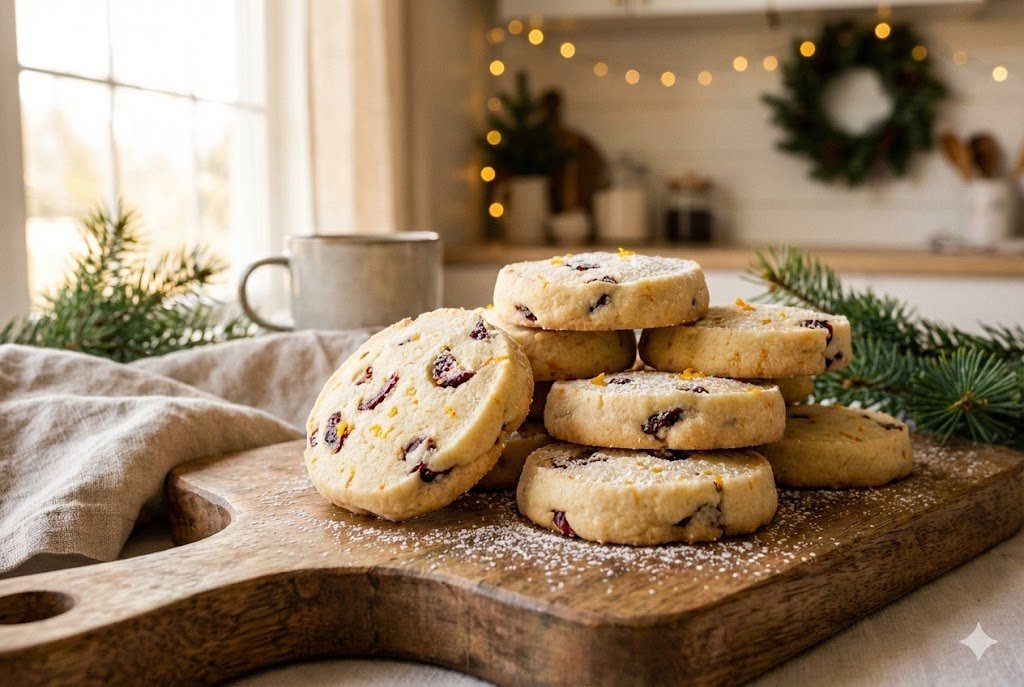
Plus, they look gorgeous. The specks of bright red and orange against the pale, golden dough make them look like you tried way harder than you actually did. And isn’t that the ultimate goal of baking? Maximum credit for minimum effort? FYI, that’s my life motto.
The Holy Trinity of Ingredients
You cannot hide bad ingredients in shortbread. In a chocolate cake, you can get away with generic cocoa powder. Here, the butter is the star, the director, and the producer. If you use cheap, watery butter, your cookies will spread into sad, greasy puddles. 🫠
Here is exactly what you need to hoard from the grocery store:
- 1 Cup (2 Sticks) Unsalted Butter: This must be at room temperature. Not melted, not rock hard. If you press it, your finger should leave a dent without sliding through. Splurge on the European-style butter (like Kerrygold) if your budget allows. It has a higher fat content, which means more flavor and a better crumb.
- 1/2 Cup Powdered (Confectioners’) Sugar: Put down the granulated sugar. We want a melt-in-your-mouth texture, not a gritty crunch. The cornstarch in powdered sugar also helps keep the cookies tender.
- 2 Cups All-Purpose Flour: Use the “spoon and level” method to measure this. If you scoop directly from the bag, you pack the flour down, end up with too much, and bake bricks instead of cookies.
- 1/2 Teaspoon Salt: Even sweet things need salt. It makes the butter taste more “buttery.”
- 1 Tablespoon Fresh Orange Zest: This is about one medium orange. Do not use the dried stuff in a jar. It tastes like dust.
- 1/2 Cup Dried Cranberries: Chop these up roughly. You don’t want massive chunks that cause the cookies to crumble when you slice them.
- 1 Teaspoon Vanilla Extract: Use the real stuff. Imitation vanilla has a weird chemical aftertaste that lingers. :/
Step-by-Step: How to Nail It
Follow these steps exactly. I’ve failed at this enough times so you don’t have to. We are going for “bakery quality,” not “Pinterest fail.”
1. The Flavor Infusion
Start by placing your 1/2 cup of powdered sugar and 1 tablespoon of orange zest in your mixing bowl. Before you add the butter, use your fingers to rub the zest into the sugar.
Why do this? The friction releases the essential oils from the zest directly into the sugar. You will smell an explosion of orange immediately. This simple step makes a huge difference in the final flavor. It distributes the citrus notes evenly so every cookie tastes amazing, not just the lucky ones. 🍊
2. Creaming the Butter (But Not Too Much)
Add your 1 cup of softened butter, 1/2 teaspoon of salt, and 1 teaspoon of vanilla to the sugar mixture.
Use a hand mixer or stand mixer to beat them together until smooth and creamy. This usually takes about 1–2 minutes.
Warning: Do not whip this like you’re making a cake. We do not want to incorporate a ton of air. Too much air causes the cookies to puff up in the oven and then collapse. We want dense, tender cookies. Just mix until combined and creamy.
3. The Flour Power
Turn your mixer to the lowest speed. Gradually add the 2 cups of flour.
Mix only until the dough starts to come together. It will look clumpy and shaggy. That is perfect. If you keep mixing until it forms a smooth ball in the bowl, you developed too much gluten. Tough cookies are a crime against humanity. 🛑
Toss in the 1/2 cup of chopped dried cranberries and mix for five seconds just to distribute them.
4. The Roll and Chill
Dump the dough onto a clean surface. Use your hands to gently press it into a ball.
Divide the dough in half. Roll each half into a log, about 1.5 to 2 inches in diameter.
Pro Tip: If you want perfectly round cookies, place the log inside an empty paper towel roll (cut lengthwise) to help it keep its shape in the fridge. Otherwise, you get flat-bottomed cookies. Which, honestly, taste the same, so don’t stress too much. IMO, a rustic shape looks homemade.
Wrap the logs tightly in plastic wrap. Twist the ends like a candy wrapper.
Now, chill the dough. Put it in the fridge for at least 2 hours (or up to 3 days). You absolutely cannot skip this. The butter needs to solidify so the cookies hold their shape in the oven. If you bake warm dough, you get pancakes. 🥞
5. Slice and Bake
When you’re ready to bake, preheat your oven to 325°F (163°C). Notice this is lower than the standard 350°F. Shortbread bakes low and slow.
Take the logs out of the fridge. Use a sharp knife to slice them into rounds, about 1/4 to 1/2 inch thick.
Place them on a baking sheet lined with parchment paper. They won’t spread much, so you can space them about an inch apart.
Bake for 12–15 minutes.
Crucial Check: You do not want these to turn golden brown. They should remain pale. You only want to see the tiniest hint of color on the bottom edge. If the tops turn brown, they will taste burnt.
Let them cool on the baking sheet for 5 minutes before moving them to a wire rack. They are fragile when hot.
Troubleshooting Your Shortbread
Even with a simple recipe, things go sideways. Have you ever stared at a baking sheet and wondered, “What did I do to deserve this?” Let’s troubleshoot before that happens.
- The Dough is Crumbly: If your dough refuses to stick together when you try to roll the log, your butter was likely too cold, or you measured too much flour. Just keep working it with the warmth of your hands. It will come together. Do not add water.
- The Cookies Spread: You didn’t chill the dough long enough, or your oven was too hot. Patience is key here.
- They Taste Bland: You probably used unsalted butter but forgot to add the salt. Or you used old spices/zest. Always taste your dough (raw egg-free, so snack away!).
Variations to keep it Fresh
Once you master this base, you can get fancy. I love these cookies as they are, but sometimes I feel the need to be “extra.”
The White Chocolate Dip
Melt some high-quality white chocolate. Dip half of the cooled cookie into the chocolate. Let it set on parchment paper. The creamy sweetness of the white chocolate pairs insanely well with the tart cranberry. 🍫
The Pistachio Crunch
Swap out half the cranberries for chopped pistachios. The green nuts look festive next to the red cranberries, and the nutty flavor adds another layer of complexity.
The Lemon Switch
Out of oranges? Use lemon zest instead. Lemon and cranberry is a sharper, brighter combination that screams “afternoon tea.”
Storage and Freezing: The Gift That Keeps on Giving
Shortbread has a superpower: it lasts forever. Okay, not forever, but way longer than soft cookies.
- Room Temperature: Store baked cookies in an airtight container for up to one week. They actually taste better on day two because the flavors have time to meld.
- Freezing Dough: This is the real hack. Make the logs, wrap them in plastic, then put them in a freezer bag. They stay good for 3 months. When a cookie craving hits, just slice and bake directly from frozen (just add a minute or two to the baking time).
This makes them the ultimate emergency gift. Forgot a birthday? Slice, bake, put in a tin. You look like a thoughtful genius, and no one knows you panicked 20 minutes ago. 🎁
Nutritional Information (Per Serving)
I know, I know. You don’t eat shortbread for the health benefits. You eat it for the soul benefits. But for those keeping track, here is what you are looking at per cookie (assuming a yield of about 24 cookies):
- Calories: ~105 🔥
- Total Fat: 7g
- Saturated Fat: 4.5g
- Cholesterol: 20mg
- Sodium: 45mg
- Carbohydrates: 10g
- Sugars: 4g
- Protein: 1g
Note: These are estimates based on standard ingredients. If you eat the raw dough (we all do it), the calories still count. Sorry.
Conclusion
Cranberry Orange Shortbread perfectly balances elegance and ease. It requires minimal ingredients, minimal effort, and delivers maximum flavor payoff. It’s the kind of recipe that makes people think you went to pastry school, even if you just rolled dough in your pajamas.
So, here is my challenge to you: Go buy the good butter. Yes, the expensive block in the gold foil. Make a batch of these this weekend. Eat one warm off the baking sheet (after it cools slightly, please don’t burn your tongue).
You will realize that the best things in life are simple, buttery, and slightly tart.